The history of Scotlands most iconic and controversial national dish.
Haggis, a traditional Scottish dish, is often regarded with both curiosity and reverence. Its origins are shrouded in mystery, with many myths and tales surrounding its creation. This hearty dish, made from sheep’s offal mixed with oats and spices, encapsulates Scotland’s rich culinary heritage. It’s also closely intertwined with the national identity of Scotland, and still a source of amusement to many. Here’s a look at the fascinating history of haggis.
Ancient Origins
Early References: The earliest recorded mention of a dish similar to haggis can be traced back to ancient Greece and Rome. The Roman cookbook “Apicius” mentions a dish made from offal, similar to the ingredients used in haggis. The word “haggis” itself is believed to derive from the Old Norse word “haggw,” which means to chop or hew, reflecting the preparation process.
Medieval Times
Medieval Scotland: Haggis became more prevalent in Scotland during the medieval period. At that time, food preservation was a challenge, and using every part of the animal was essential for survival. Offal, or the internal organs of an animal, was perishable, so it was cooked quickly. The method of encasing offal in the animal’s stomach lining served both as a cooking method and a way to preserve the meat for longer periods.
Robert Burns and Cultural Significance
Burns’ “Address to a Haggis”: Haggis gained national significance in 1787 when Scotland’s national poet, Robert Burns, wrote “Address to a Haggis.” This poem celebrated haggis as the “great chieftain o’ the pudding-race,” cementing its status as a symbol of Scottish identity. Every year, on January 25th, Scots celebrate Burns Night with a traditional meal of haggis, neeps (turnips), and tatties (potatoes), accompanied by recitations of Burns’ poetry and Scottish music.
Fair fa’ your honest, sonsie face,
Great Chieftain o’ the Puddin-race!
Aboon them a’ ye tak your place,
Painch, tripe, or thairm:
Weel are ye wordy of a grace
As lang ‘s my arm.The groaning trencher there ye fill,
Your hurdies like a distant hill,
Your pin wad help to mend a mill
In time o’ need,
While thro’ your pores the dews distil
Like amber bead.
Modern Times
Evolution and Variations: In contemporary times, haggis has evolved to include various versions to cater to different dietary preferences. Vegetarian and vegan haggis, made with lentils, beans, and vegetables, have become popular alternatives. Despite its evolution, traditional haggis remains a beloved dish in Scotland and has found a place on menus worldwide, particularly in Scottish-themed pubs and restaurants.
Haggis in Popular Culture: Haggis has also made its mark in popular culture, often featured in films, books, and television shows depicting Scottish life and traditions. Its unique preparation and rich history make it a subject of fascination and pride for Scots and an intriguing culinary curiosity for those abroad.
Is a Haggis a Creature
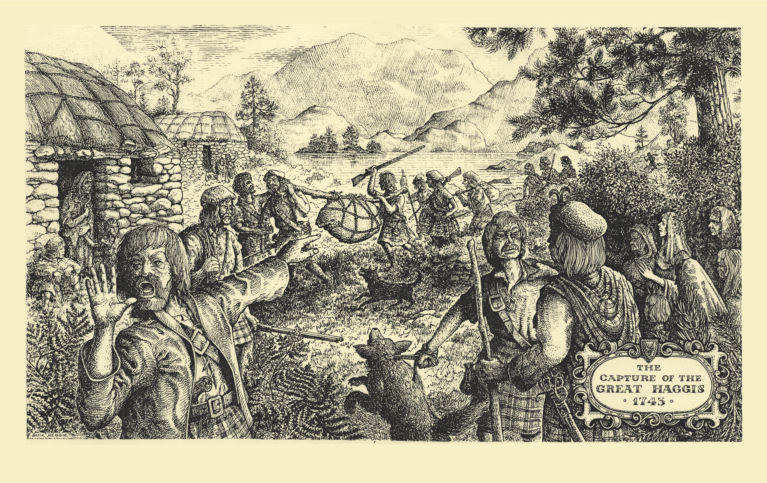
Humorous Myths: Adding to the mystique of haggis is the mythical creature known as the “Wild Haggis.” According to Scottish folklore, the wild haggis is a small, four-legged creature with legs of different lengths, allowing it to run quickly around the steep hills of the Highlands. This humorous myth often amuses tourists and is a playful part of Scotland’s cultural narrative. What is ever so slightly less humorous is the attempt to sell Haggis Hunting trips to wealthy tourists in certain seedy areas of the town.
Culinary Significance: What’s in a Haggis
Haggis Traditional Ingredients: Traditional haggis is made from sheep’s pluck (heart, liver, and lungs), minced with onion, oatmeal, suet, spices, and salt, mixed with stock, and encased in the animal’s stomach lining. It is then simmered for several hours. This method of preparation highlights the resourcefulness of Scottish cooks in utilizing every part of the animal.
Modern Day Celebrations: Today, haggis is enjoyed year-round but is especially prominent during celebrations of Scottish heritage, such as Hogmanay (New Year’s Eve) and St. Andrew’s Day (Scotland’s national day). It continues to be a symbol of Scottish pride and culinary tradition, reflecting the nation’s history and resilience.
Conclusion
Haggis, with its humble origins and cultural significance, is more than just a dish—it’s a symbol of Scottish heritage and ingenuity. Its journey from ancient times to modern-day celebrations encapsulates the spirit of Scotland, blending tradition with a touch of myth and humour. Whether enjoyed in a traditional setting or as a modern twist, haggis remains a beloved and iconic part of Scotland’s culinary landscape.
Our Edinburgh Old Town tour gives you a chance to sample Haggis in a more modern preparation. Book on today to sample the timorous wee beastie for yourself!